Logout
 -

Lesbian Couple’s Harrowing Journey Shines Light on Continuing Dangers of ‘Conversion Therapy’
1 min read Aug 3, 2023
 10:00 AM
drugs
10:00 AM
drugs -

Olympic Medallist Mirabai Chanu Appeals to Modi, Shah to Bring Peace in Manipur
This atmospheric source of ocean radioactivity has worked on Earth for almost three billion years. Along with uranium radioactive decay products, humans live within this natural radioactive background.
This year the Japanese government plans to release 1.3 million tonnes of water – used to cool the damaged reactor cores from the Fukushima Daiichi Nuclear Power Plant accident in March 2011 – into the Pacific Ocean
Between 2011-2013, approximately 300,000 tonnes of untreated wastewater had already flowed into the ocean off Fukushima. These first two years were the most dangerous time because long-lived heavy nuclei, like cesium-137, strontium-90 and shorter-lived iodine-131, from nuclear fission in the reactors ended up in the ocean.
Since 2013, the stored water has also accumulated flushed seawater goundwater which leaked into the three damaged reactor cores.
1 min read
Jul 31, 2023
8:11 AM
sports -

Japan to Release 1.3 Million Tonnes of Water Used During Fukushima Nuclear Accident
The water used to cool damaged reactor cores from the Fukushima Daiichi Nuclear Power Plant accident in March 2011.
This atmospheric source of ocean radioactivity has worked on Earth for almost three billion years. Along with uranium radioactive decay products, humans live within this natural radioactive background.
This year the Japanese government plans to release 1.3 million tonnes of water – used to cool the damaged reactor cores from the Fukushima Daiichi Nuclear Power Plant accident in March 2011 – into the Pacific Ocean
Between 2011-2013, approximately 300,000 tonnes of untreated wastewater had already flowed into the ocean off Fukushima. These first two years were the most dangerous time because long-lived heavy nuclei, like cesium-137, strontium-90 and shorter-lived iodine-131, from nuclear fission in the reactors ended up in the ocean.
Since 2013, the stored water has also accumulated flushed seawater goundwater which leaked into the three damaged reactor cores.
The big challenge is how to manage 1.3 million tonnes of unsafe radioactively-tainted water.
One of three options was to filter out the nuclear fission nuclei, then dump the filtered water into the ocean to dilute any remaining amount of tritium or carbon-14. Japan has chosen this complex way from all the fraught options.
Disposing of untreated wastewater into the ocean would release nuclear fission products in an uncontrolled manner. The danger of indiscriminately releasing nuclear fission products into the ocean is that the products can find their way into the food chain.
Once in the food chain, the nuclear fission heavy nuclei like cesium-137, strontium-90 and iodine-131 tend to concentrate in human muscle, bones, and thyroid and cause Cancer.
1 min read
Jul 31, 2023
8:10 AM
environment -
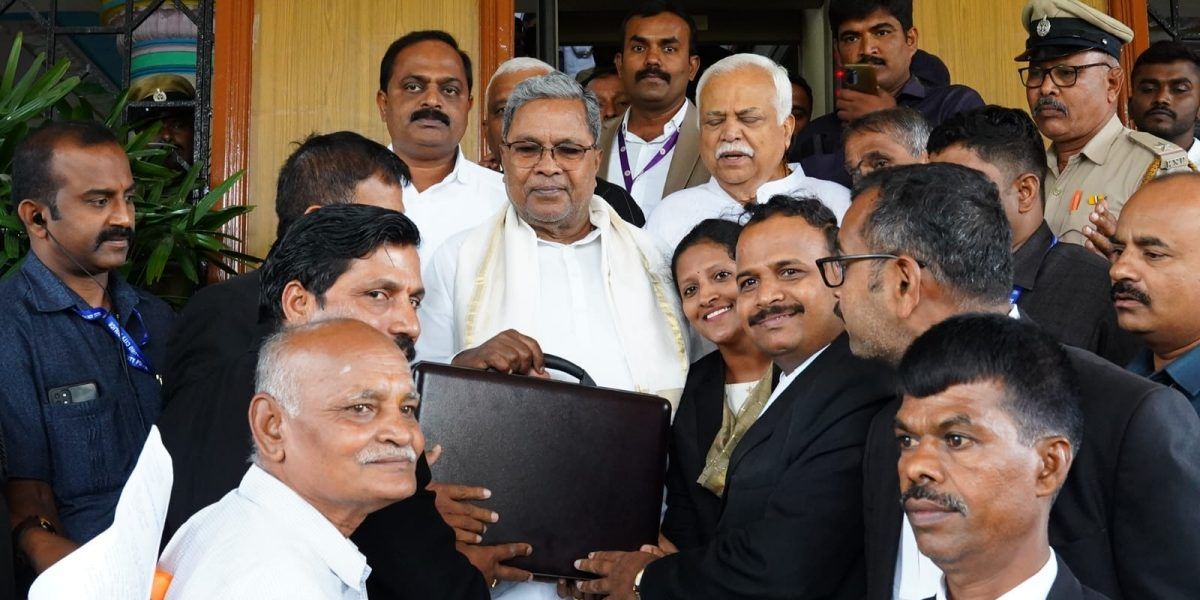
Naga Body Demands Action Against Meitei Groups for Killing of Naga Woman in Imphal East
In a shocking instance from Imphal East on Saturday, Lucy Maring, a 55-year-old Naga woman who had a mental illness was found murdered. She had been shot and her face disfigured.
“UNC condemns such barbaric committed on innocent Nagas despite knowing her identity as Naga,” the statement reads, demanding action against the perpetrators including Meira Paibis (Meitei women’s vigilante groups). “…exemplary punishment should be initiated upon the culprits,” UNC has said.
The other death was of a 34-year-old man identified as Jangkholun Haokip in Laimaton Thangbuh, a Kuki village in Kangpokpi district in the hill. According to The Hindu, 40-50 armed miscreants stormed the village and fired shots on Sunday.
“A huge mob of civilians, predominantly women, congregated in the foothills and security forces pushed back the mob from entering the hills. The miscreants however fled the area,” a police source told the newspaper.
1 min read
Jul 31, 2023
8:02 AM
crime -
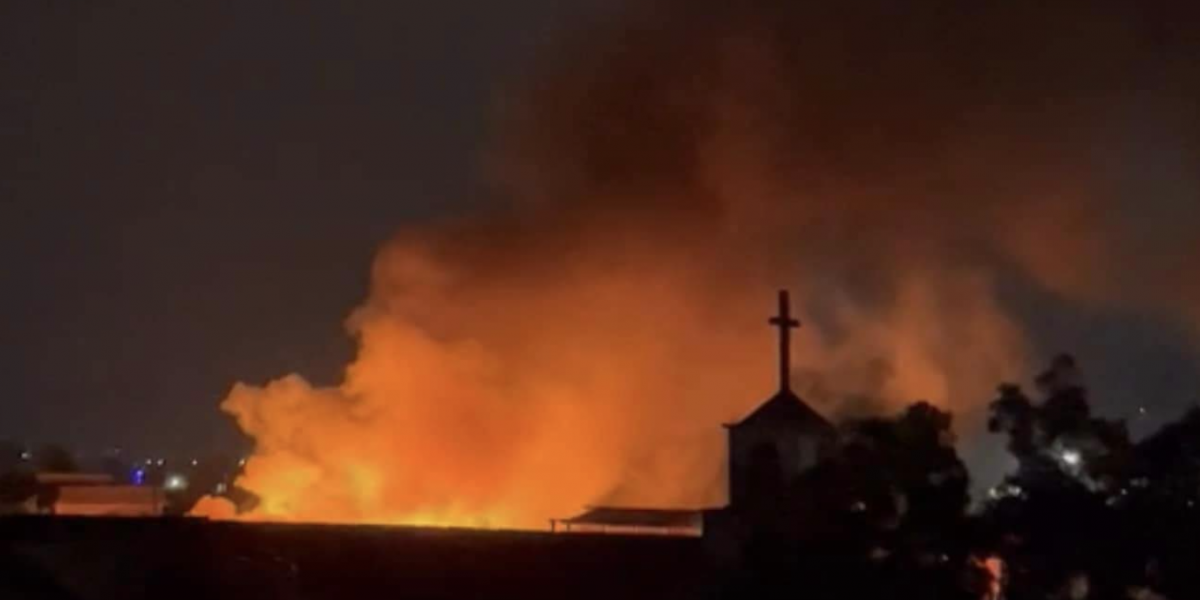
Japan to Release 1.3 Million Tonnes of Water Used During Fukushima Nuclear Accident
The water used to cool damaged reactor cores from the Fukushima Daiichi Nuclear Power Plant accident in March 2011.
This atmospheric source of ocean radioactivity has worked on Earth for almost three billion years. Along with uranium radioactive decay products, humans live within this natural radioactive background.
This year the Japanese government plans to release 1.3 million tonnes of water – used to cool the damaged reactor cores from the Fukushima Daiichi Nuclear Power Plant accident in March 2011 – into the Pacific Ocean
Between 2011-2013, approximately 300,000 tonnes of untreated wastewater had already flowed into the ocean off Fukushima. These first two years were the most dangerous time because long-lived heavy nuclei, like cesium-137, strontium-90 and shorter-lived iodine-131, from nuclear fission in the reactors ended up in the ocean.
Since 2013, the stored water has also accumulated flushed seawater goundwater which leaked into the three damaged reactor cores.
1 min read
Jul 31, 2023
8:01 AM
world -
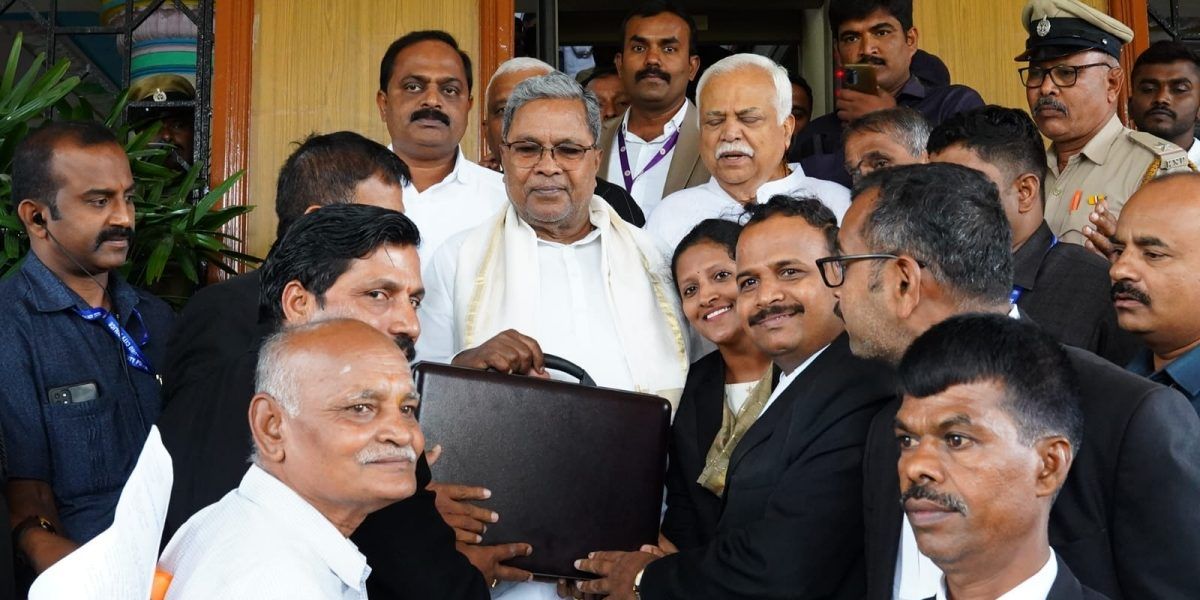
Bengal Divided Will Pull In Several Different Ways
Curzon followed by writing a letter to St. John Brodnick, the Secretary of State for India, in February 1905, “The whole of their (Bengal’s) activity is directed to creating an agency so powerful that they may one day be able to force a weak government to give them what they desire”. So, Bengal’s (first) partition followed the same year.
Recent developments between the Union and the State of West Bengal show that the former’s attitude towards Bengal remains the same even today.
Ananta Rai has been demanding for a separate state of ‘Greater Cooch Behar’ carved out of West Bengal. This demand is part of an even greater demand of Kamatapur comprising 8 districts of West Bengal and 15 of Assam. In the recent past, the area has witnessed large scale violent statehood movements by the Gorkhas, Rajbangshis, Kochs and Kamatapuris.
The region is sandwiched between Nepal, Bhutan on one side and Bangladesh on the south. The “chicken’s neck”, also known as the ‘Siliguri Corridor’ in north West Bengal, a piece of land just 21 km wide and 70 km long, that connects the entire north-east India with the mainland remains a vulnerable region. More so, in recent years with China expanding its chain of model villages close to the Line of Actual Control (LAC), 130 km away, which faces the strategically crucial corridor.
In the past, two of BJPs Union ministers from Bengal have openly encouraged dismemberment of West Bengal much to the embarrassment of the other state leaders. After all, the Rajbangshis matter in only three Lok Sabha constituencies and they fear losing the rest of West Bengal.
Additionally, BJP is the only all-India party that supports the demand for separation of the Darjeeling Hills from West Bengal.
Also read: Anti-BJP Sentiments Stir Darjeeling Amidst Drastic Changes in Hill Party Equations
It is being said that the ‘maharaja’, holds considerable influence over the Koch-Rajbangshi community and has over 18 lakh followers accounting for nearly 2.4% of voters in the state. Not all followers need be voters nor reside in the three districts of Alipurduar, Cooch Behar and Jalpaiguri, where they are concentrated. Besides, the other faction of the community led by Bangshibadan Barman, supports the TMC.
It is also being said that there are 33 lakh Rajbangshis. The projected current population of these three districts where they matter electorally, is 76 lakhs and 30% of them or about 23 lakhs are from the Rajbangshi community according to reports. So the remaining 10 lakhs are scattered insignificantly in other districts. Has the BJP gone wrong somewhere in their expected vote calculations? But that is not so important for the country.
Anant Rai’s reported statement that creation of a new Union Territory (UT) in north Bengal was “only a matter of time”, raises serious concern. Rajbangshis are spread over not only north Bengal but in parts of Assam, Bihar, Nepal and Bangladesh. It goes without saying that fuelling any ethnic passion in this vulnerable region will be detrimental to the safety and security of the entire north-eastern part of the country.
The BJP’s inability to corner and dislodge the Mamata Banerjee government appears to be the main reason for their central leaders to take the path of separatism. The people of Bengal went through a trauma when their second partition came in 1947. To add insult to that injury, the BJP government commemorated what the Governor “peculiarly chose” as “the State Foundation Day of West Bengal” on June 20, that never was.
2 min read
Jul 31, 2023
8:01 AM
politics -
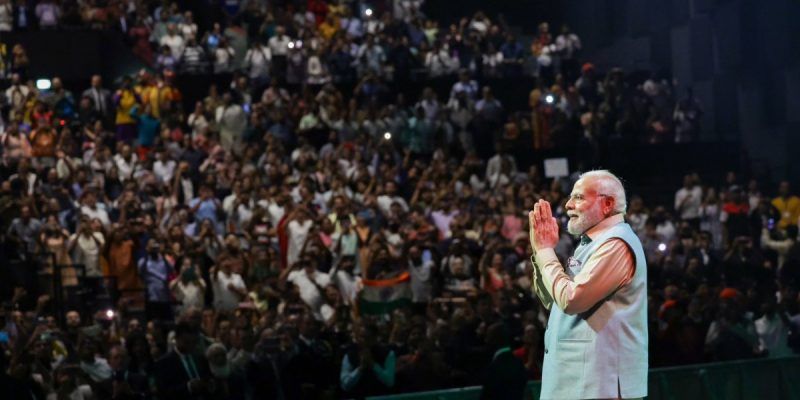
Olympic Medallist Mirabai Chanu Appeals to Modi, Shah to Bring Peace in Manipur
"Many players have not been able to train because of this conflict [in Manipur] and there has been disturbance in the study of students. Many lives have been lost and many houses have been burnt down," Mirabai Chanu said.
Chanu is currently training in the US. She said the ongoing conflict will have a long-term impact on sportspersons from the northeast, as they are having to forgo training sessions and stay home for security reasons.
“The conflict in Manipur is going to complete three months but peace is yet to return. Many players have not been able to train because of this conflict and there has been disturbance in the study of students. Many lives have been lost and many houses have been burnt down,” she said in a video uploaded to her Twitter account.
“I have my house in Manipur though I am currently training in the USA to prepare for the upcoming World Championships and Asian Games. Even though I am not in Manipur, I always think about when this conflict will end,” she continued.
The Kuki and Meitei communities in Manipur have been caught in a conflict for over two months now. Despite about 15o people having lost their lives and tens of thousands being displaced, Modi is yet to speak out on the matter or visit the state. There has been widespread anger against BJP chief minister N. Biren Singh, particularly from the tribal community, but he has remained in his post despite multiple calls for his resignation.
1 min read
Jul 31, 2023
8:01 AM
sports -

Naga Body Demands Action Against Meitei Groups for Killing of Naga Woman in Imphal East
In a shocking instance from Imphal East on Saturday, Lucy Maring, a 55-year-old Naga woman who had a mental illness was found murdered. She had been shot and her face disfigured.
“UNC condemns such barbaric committed on innocent Nagas despite knowing her identity as Naga,” the statement reads, demanding action against the perpetrators including Meira Paibis (Meitei women’s vigilante groups). “…exemplary punishment should be initiated upon the culprits,” UNC has said.
The other death was of a 34-year-old man identified as Jangkholun Haokip in Laimaton Thangbuh, a Kuki village in Kangpokpi district in the hill. According to The Hindu, 40-50 armed miscreants stormed the village and fired shots on Sunday.
“A huge mob of civilians, predominantly women, congregated in the foothills and security forces pushed back the mob from entering the hills. The miscreants however fled the area,” a police source told the newspaper.
1 min read
Jul 31, 2023
8:01 AM
crime -

How Manik Bandyopadhyay Probed the Alienation Plaguing 20th Century
The youngest and the most scathingly morbid of the famed Bandyopadhyay trio of Bengali literature (the other two being Bibhutibhushan and Tarashankar), in the expanse of thirty-six novels and one hundred and seventy-seven short stories, Manik Bandyopadhyay (1908-1956; originally named Prabodh Kumar) carried forward the avant-garde line of writing of the Kallol era (1923-1935).
The 1920s Bengal was rife with inflation, unemployment, and food shortage among other maladies. The Kalloleans pledged to redeem this society by critically capturing its real, execrable condition. Thereafter, denouncing the aesthetics of Rabindranath Tagore, which they deemed illusive, these writers drew on their personal experience and wrote of modern Bengal’s grime, filth, and the marginalised underprivileged classes whose activities and speech practices were hitherto virtually exiled from the ‘pure’ realm of literature. In contrast to the Calcutta-centricity of contemporaries like Premendra Mitra and Manish Ghatak, Manik – much like the colliery-chronicler Shailajananda Mukhopadhyay – equally focused on the mofussil setting in capturing the human alienation characteristic of his times.
Beginning from the 1940s, when Manik joined the Communist Party of India (CPI) after his exposure to political thoughts during World War II and witnessing multiple labour protests in Bengal, Marxism became the mainstay of his works. His careful readings of socialist philosophers manifested in the thorough understanding of and allegiance to socialist tenets discernible in his fictions – something missing in the work of later politically-informed writers like Mahasweta Devi, who was inevitably disabused of her hopes in CPI because of its hypocrisy during the 1960s. Henceforth, as an avowed Marxist analyst, Manik conspicuously grounded his psychological exploration of the modern human condition in its socio-economic context without ever letting the literary careen on to the mere polemic.
A need-driven world of bare minimums
In Manik’s storyworld, the struggle of survival remains ceaseless. Even when the spectre of shrivelled bodies shuffling through a famine-stricken land is replaced by the lush green of new harvest, the peasants anxiously depend on the clemency of zamindars, instituted by the colonial system, to spare them a portion of their own harvest. The moment the aspirations of these social underlings try to tiptoe beyond the exploitative systems that ensure that they are barely – if at all – able to secure the basic necessities of food, clothing, and shelter, they are necessarily punished, put into place. Post-war advertisements and articles in the newspaper remind its readers that they must not waste money on unnecessary purchases.
In their prolonged fight for existence, Manik’s desolate subjects are drained of the depth of social connections. Thus, friends fleece friends in distress, and families are often held together only by soulless convenience, where none have the energy to love or fight, where the death of an infant is welcome because it means one less mouth to feed. Clearly, the modern capitalist world dehumanizes its inhabitants.
2 min read
Jul 31, 2023
8:01 AM
literature
MOST READ News
-

Olympic Medallist Mirabai Chanu Appeals to Modi, Shah to Bring Peace in Manipur
2023-07-31T08:14:27.000+00:00
2023-07-31T08:14:27.000+00:00
-
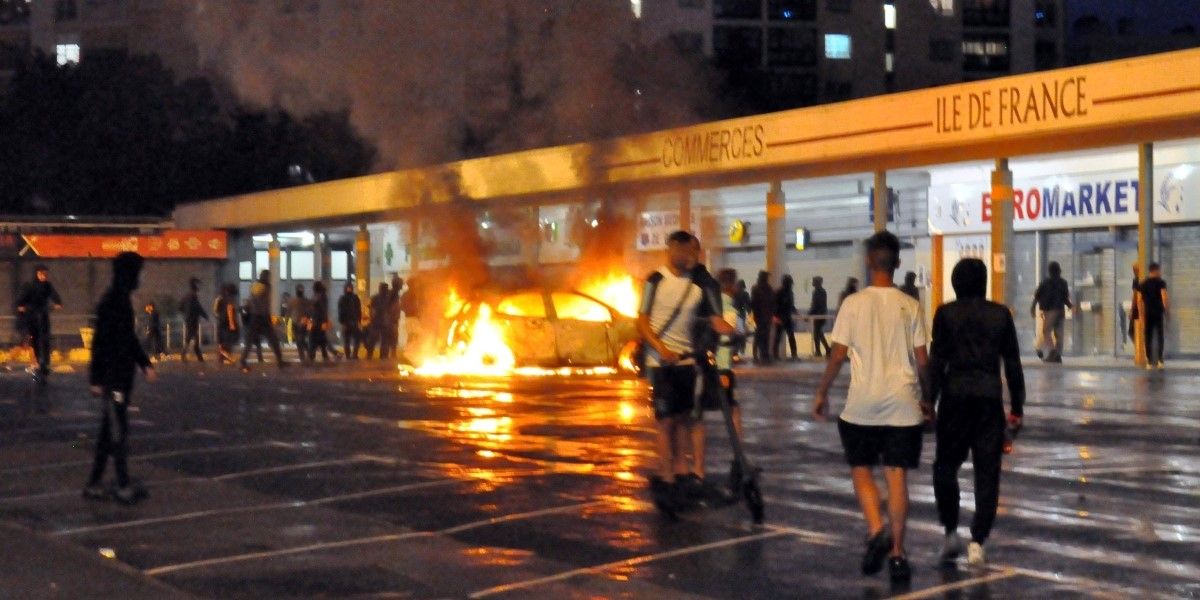
Ananta Rai has been demanding for a separate state of ‘Greater Cooch Behar’ carved out of West Bengal.
2023-07-31T08:13:21.000+00:00
2023-07-31T08:13:21.000+00:00
-

Afghan Singer Hasiba Noori Killed in Attack by Unknown Gunmen in Pakistan
2023-07-31T08:13:06.000+00:00
2023-07-31T08:13:06.000+00:00
-

The Import of Foreign Higher Education in India: Committing to the Profit Motive Without Addressing Structural Needs
2023-07-31T08:12:52.000+00:00
2023-07-31T08:12:52.000+00:00
-
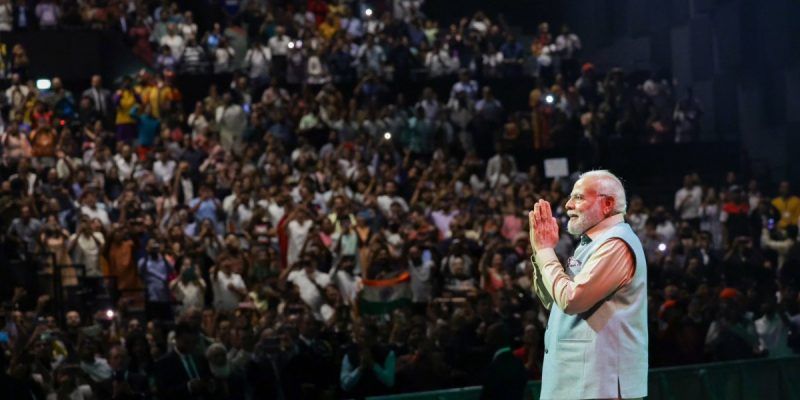
Bengal Divided Will Pull In Several Different Ways
2023-07-31T08:12:40.000+00:00
2023-07-31T08:12:40.000+00:00
-

Olympic Medallist Mirabai Chanu Appeals to Modi, Shah to Bring Peace in Manipur
2023-07-31T08:12:31.000+00:00
2023-07-31T08:12:31.000+00:00